Kashmir & Gilgit-Baltistan Crisis: The Political Blunder That Changed Everything", "
The political landscape of Pakistan's northern territories is undergoing a seismic shift that few mainstream media outlets are willing to discuss openly. As elections unfold in Gilgit-Baltistan and protests intensify in Azad Kashmir, a pattern of systematic manipulation, broken promises, and heavy-handed tactics has emerged that threatens to permanently damage the relationship between these regions and the Pakistani state. This comprehensive analysis reveals the hidden dynamics behind the current crisis and exposes the strategic blunders that have brought us to this critical juncture.
The Gilgit-Baltistan Election: Democracy Under Siege
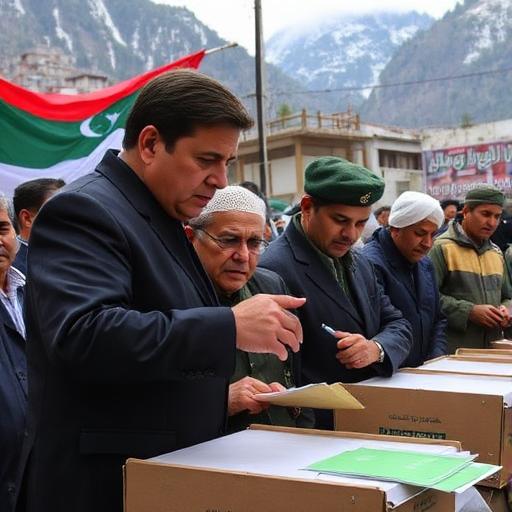
Today marks a crucial moment for the citizens of Gilgit-Baltistan as voting takes place across 24 constituencies. However, the electoral process has been severely compromised before a single vote was cast. The establishment has implemented what can only be described as a systematic approach to ensuring a predetermined outcome, leaving the people of Gilgit-Baltistan facing an uphill battle to protect their democratic mandate.
For Pakistan Tehreek-e-Insaf, the prospects have been deliberately minimized through institutional manipulation. The party has been stripped of its electoral symbol, operates without any governmental support structure, and faces an environment designed to suppress their political participation. The citizens of Gilgit-Baltistan understand clearly that even if they manage to elect a PTI government, they will face the same discrimination and mistreatment that has been inflicted upon Khyber Pakhtunkhwa province, where the Chief Minister and provincial officials have repeatedly voiced their concerns about federal overreach and bias.
The phenomenon of pre-poll rigging has already occurred, with the establishment having played its cards well in advance of election day. The real test now lies with the voters themselves and how effectively they can protect their votes against a system designed to subvert their will. This represents not just a political challenge but a fundamental test of democratic resilience in the face of institutional obstruction.
The Digital Blackout Strategy
In a move that has become disturbingly familiar in Pakistani elections, internet services in Gilgit-Baltistan were suddenly suspended just before voting commenced. This digital blackout serves multiple purposes: it prevents real-time monitoring of electoral irregularities, blocks the documentation and sharing of evidence of manipulation, and creates an information vacuum that can be filled with whatever narrative suits those controlling the process.
The contrast with democratic processes in developed nations could not be more stark. In the United Kingdom, elections feel like festivals of democracy where voting is facilitated, citizens are welcomed, and the entire infrastructure supports rather than suppresses participation. Internet connectivity remains uninterrupted, allowing for transparent monitoring and immediate reporting of any concerns. No votes are stolen because the system is designed to protect rather than undermine the democratic process.
In Pakistan, however, elections have become synonymous with violence, raids, arrests, and state oppression. The pattern is predictable: nomination papers are rejected on technicalities, electoral symbols are confiscated, voter lists are manipulated, false promises proliferate, and finally, the communication infrastructure is shut down. When mobile phones and internet are disabled, the entire electoral result can be transformed behind closed doors. This has become the latest model for conducting elections in Pakistan, representing an unprecedented level of systemic manipulation that previous elections, despite their flaws, never reached.
Resource Exploitation: The Hidden Agenda Behind Political Control
Khalid Khurshid, a prominent member of Pakistan Tehreek-e-Insaf and one of Imran Khan's most loyal colleagues, has issued a stark warning about what is truly at stake in these elections. After being removed from power, the government that replaced him in Gilgit-Baltistan has engaged in wholesale exploitation of the region's resources. Mountains have been sold off, and a ten percent cut has been extracted from land transactions, enriching those in power at the expense of local communities.
The danger intensifies with the current electoral process. If either the Pakistan Muslim League-Nawaz or Pakistan Peoples Party forms the next government, the scale of resource extraction and corruption will make the looting of Punjab look insignificant by comparison. The fundamental issue is control over natural resources, and once the establishment achieves complete control over Gilgit-Baltistan through their puppet government, the people of the region will suffer for decades until a genuine people's government emerges to reverse these extractive policies.
The pattern is clear: wherever establishment interests settle, civilian governments cannot remove them. They never leave and never relinquish control over anything they have claimed. This creates a self-perpetuating cycle where regional resources flow upward to benefit a small elite while local populations remain impoverished and disenfranchised.
The Kashmir Crisis: Voices of Resistance
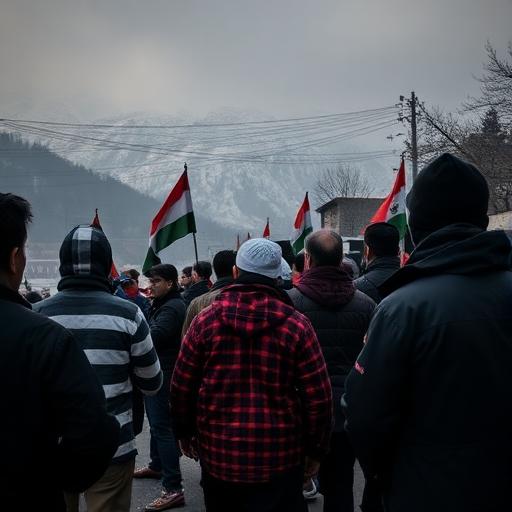
While Gilgit-Baltistan faces electoral manipulation, Azad Jammu and Kashmir is experiencing an escalating crisis that threatens to spiral beyond control. The situation has deteriorated to the point where prominent leaders are warning of potential armed conflict. Shaukat Nawaz Mir, a member of the Joint Awami Action Committee, issued an urgent audio statement addressing the gravity of the situation.
We want to make the state and state institutions understand that our movement is for basic human necessities. We clearly state that we are not against any country, institution, or sect. Linking our peaceful struggle to terrorism is a great injustice and violates the United Nations Charter. I am addressing you through this audio because we currently have no internet access. False and baseless news is being spread about my arrest, while I am actually at a secure location in continuous contact with core members of the Joint Awami Action Committee, and we are going through a process of mutual consultation.
The martyrdom of their senior leader Shahzeb Habib at the hands of Rangers has intensified the crisis, with the entire territory now under lockdown. The government's own actions of creating fear and terror have contributed significantly to the shutdown, effectively helping to paralyze the region. The Joint Awami Action Committee has announced complete lockdowns across various divisions and preparations for a historic march from Mirpur division.
Omar Nazir Kashmiri: The Warning That Cannot Be Ignored
Omar Nazir Kashmiri, one of the most popular leaders of the Joint Awami Action Committee, has been shot multiple times. While confirmed information about his health status remains unavailable due to the communication blackout, his final recorded message before the incident carries an ominous warning that demands attention. In a seven-minute video that has circulated despite the internet restrictions, he stated clearly that if the current situation continues, it will mark the beginning of armed conflict in the region.
The severity of this warning cannot be overstated. When a peaceful movement's leader, who has consistently advocated for dialogue and constitutional means, begins speaking about the possibility of armed resistance, it indicates that the establishment's approach has pushed people beyond their breaking point. Those wielding weapons often fail to think clearly about long-term consequences, but the people facing those weapons eventually reach a threshold where peaceful options seem exhausted.
In response to the escalating crisis, the government has banned the organization and declared it a proscribed entity, labeling its members as terrorists. This approach conveniently ignores that just recently, these same leaders were being engaged in dialogue, invited to the Supreme Court, and offered opportunities to participate in electoral politics. The sudden shift from negotiation to criminalization represents a strategic failure of the highest order.
Prime Minister Faisal Mumtaz Rathore: A Study in Political Contradictions
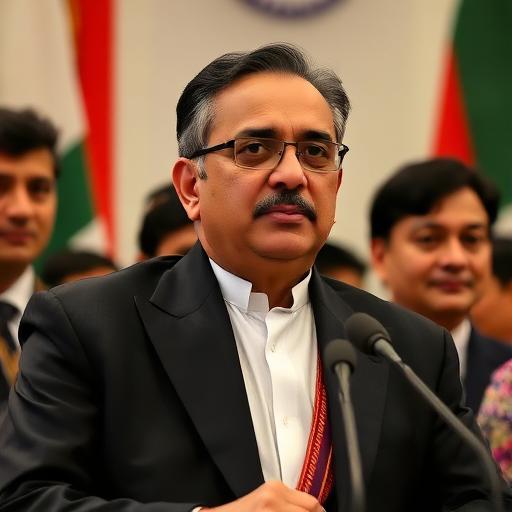
The appointed Prime Minister of Azad Kashmir, Faisal Mumtaz Rathore, has become a case study in political inconsistency. His statements have varied so dramatically within single days that analysts have noted the impossibility of reconciling his various positions. He oscillates between declaring the Action Committee members terrorists unworthy of dialogue, to calling them "our own people" and expressing willingness to negotiate, to threatening emergency rule.
His body language reveals a man not in control of his own decisions. He appears to be playing the role of an orderly, executing whatever instructions are given to him by security forces and establishment figures. This pattern of behavior confirms what many have suspected: the civilian government in Azad Kashmir operates as a puppet administration, implementing policies dictated by others rather than governing according to the will of the people.
What makes this particularly striking is the contrast between Rathore's positions before and after becoming Prime Minister. Before assuming office, he spoke clearly about the hybrid system operating in Kashmir, criticized the manipulation of the political process, and acknowledged the legitimacy of the people's grievances. After being elevated to his current position, his entire worldview appears to have transformed overnight.
The Twelve Seats Controversy: Blueprint for Manipulation
A critical element in understanding how the establishment maintains control in Azad Kashmir involves the twelve reserved seats for migrants. In an interview with senior journalist Saleem Safi, Faisal Mumtaz Rathore made a remarkable admission about these seats. When asked directly whether these migrant seats are used for rigging elections and imposing governments of choice, his response was unequivocal.
This is absolutely a fact. These seats have been used for rigging. This is absolutely the reality.
This confession from a sitting Prime Minister reveals the structural mechanism through which democratic outcomes are subverted. While other political parties begin their electoral count from zero and must earn each seat through popular mandate, the establishment effectively starts with twelve seats already secured. They count thirteen, fourteen, fifteen from there, while their opponents struggle to build from nothing. This mathematical advantage makes it nearly impossible for any government to form without establishment approval, regardless of popular will.
Before becoming Prime Minister, Rathore himself had acknowledged that the agreement reached with the Joint Awami Action Committee was "written in stone" and had been approved by the Prime Minister of Pakistan before being signed. He warned that any party attempting to sabotage this agreement would face difficulties. Yet once he assumed power, these commitments were apparently forgotten, and the agreement was treated as disposable.
The Media's Role: Journalism Compromised

The coverage of the Kashmir crisis has exposed deep fissures in Pakistani journalism. Social media accounts associated with Pakistan Muslim League-Nawaz, including those following Nawaz Sharif and Maryam Nawaz, have suddenly turned hostile toward Kashmiris. These accounts, which represent the party's prominent digital presence, have begun hurling abuse at Kashmiris and attacking anyone who speaks in support of their rights.
This represents a stunning reversal for a party whose leadership has historically claimed Kashmiri heritage with pride. Nawaz Sharif himself has often spoken about his Kashmiri background and his emotional connection to the region. Yet his party's social media apparatus now works actively to suppress Kashmiri voices and delegitimize their grievances.
Some journalists have gone further, attempting to link the Joint Awami Action Committee to Indian interests. The argument presented suggests that because the committee didn't protest against India when Kashmir's status was changed in 2019, they must be serving Indian interests. This reasoning collapses under the most basic scrutiny: the Joint Awami Action Committee was formed in 2023, four years after the events in question. Criticizing an organization for failing to respond to events that occurred before its existence represents either profound incompetence or deliberate dishonesty.
The Journalists Who Serve Power
Information has emerged about journalists who operate as intermediaries between the intelligence agencies and the broader journalism community. These individuals allegedly threaten colleagues with statements like "I can guarantee your safety with ISI officers, but if I don't vouch for you, you'll be picked up before morning." These same individuals present themselves as paragons of journalistic integrity on television while actively facilitating the persecution of their colleagues.
They approach journalists who have been arrested, picked up, pressured, or fired from their jobs, offering to intercede with the establishment on their behalf. This creates a system of patronage and fear that corrupts the entire profession, turning potential watchdogs into compliant servants of power. Such betrayal of journalistic principles represents not just professional failure but a fundamental betrayal of their professional community.
The Action Committee's Response: A Declaration of Resistance
The Joint Awami Action Committee has issued a formal statement that reveals the depth of alienation the current crisis has created. Released at a gathering outside CMH following the Rawalakot incident, the statement declares their commitment to continuing the mission of their martyrs until the rights of the people are secured. They specifically honored their core member Omar Nazir Kashmiri and other colleagues for their brave struggle and sacrifice for the movement.
Most significantly, the statement declares complete loss of confidence in what they term the "puppet assembly" whose members, despite signing agreements guaranteeing the people's democratic and economic rights, broke their promises and facilitated what the committee describes as "brutal terrorism by external invading forces" against the peaceful people's movement.
The language used in this declaration should alarm anyone concerned about Pakistan's territorial integrity and national cohesion. When Kashmiris begin describing Pakistani security forces as "external invading forces," it represents a fundamental rupture in the relationship that has historically bound these regions together. The slogan "Kashmir banega Pakistan" (Kashmir will become Pakistan) has been chanted for generations, yet the actions of the establishment have created conditions where Kashmiris now view Pakistani forces as foreign invaders.
The Call for Accountability and Continued Resistance
The committee has demanded the filing of FIRs (First Information Reports) against those responsible for violence against peaceful protesters. They have announced a complete lockdown across Azad Kashmir and called for a wheel jam and shutter down strike beginning at noon. The scheduled Muzaffarabad Long March remains on track, with participants being urged to proceed as planned despite the obstacles.
In response to the communication blackout, the committee has issued an innovative call for communities to use mosque loudspeakers to maintain contact with each other. This return to pre-digital communication methods demonstrates both the severity of the restrictions imposed and the determination of the movement to continue despite them. When a population must resort to mosque loudspeakers because their government has denied them access to modern communication, it reveals the extent to which the state has abandoned any pretense of serving its citizens.
The Establishment's Fundamental Failure
The current crisis in both Gilgit-Baltistan and Azad Kashmir stems from a fundamental failure of Pakistan's establishment to recognize the limits of their approach. They think only in terms of their own interests: extensions of power, special privileges, business dealings, personal arrangements, perpetuation of authority, installation of puppet governments, international relationships, foreign education for their children, and secure refuges abroad. These narrow concerns leave no room for considering the welfare of the nation or the rights of its citizens.
Until these leaders develop broader perspectives and begin prioritizing national interests over personal gain, the country will continue to suffer. The first step toward genuine change would require acknowledging a simple truth: civilians are more capable than the military in governing. They are more intelligent, more capable, more patriotic, and better understand how to run Pakistan. The country should therefore be handed over to them.
This recognition seems impossibly distant given the current trajectory. Instead, the establishment doubles down on failed approaches, creating conditions that generate the very instability they claim to be preventing. Each heavy-handed response creates more resistance, each broken promise generates more distrust, and each violent crackdown produces more martyrs around whom movements can rally.
The PPP Factor: Deals and Consequences
Senior journalist Najam Sethi has reported on behind-the-scenes negotiations that may shape the political landscape in coming weeks. According to his information, a deal regarding the 28th Constitutional Amendment and budget matters is expected with the Pakistan Peoples Party. In exchange, PPP is demanding government control in both Gilgit-Baltistan and Azad Kashmir.
If this deal fails to materialize, PPP faces serious consequences. NAB (National Accountability Bureau) cases are reportedly being prepared, and the noose is tightening around party leadership. This reveals the transactional nature of Pakistani politics at the highest levels: constitutional amendments, regional governments, and accountability cases are all bargaining chips in negotiations that have nothing to do with public welfare or democratic principles.
The people of Gilgit-Baltistan and Azad Kashmir become mere pawns in these power games, their future governance determined not by their votes or preferences but by deals struck in Islamabad's corridors of power. This instrumentalization of their political fate reinfor