How Elon Musk Became the World's Richest Man: The Complete Story","
In 1984, while other children were busy playing video games, a 12-year-old boy was coding and creating his own video game. He was a genius, different from others, and because of this difference, he had no friends. He was bullied terribly, but despite everything, he never gave up. Today, that same boy has become the world's richest man by building rockets, electric cars, and AI tools. This is the extraordinary story of Elon Musk.
Early Life and the Making of a Genius
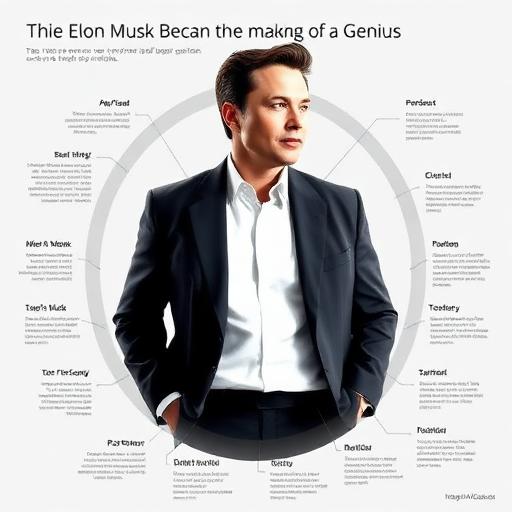
Elon Musk was born in 1971 in Pretoria, South Africa. His father was a mechanical engineer, and his mother was a model and dietitian. From a very young age, Elon displayed unusual characteristics that set him apart from other children. He had a peculiar condition where he would often slip into a trance-like state, during which he would be completely oblivious to everything happening around him.
His parents and doctors initially thought Elon had hearing problems. However, they later discovered that during these episodes, his brain functioned like a supercomputer. His focus on the external world would completely shut down, and all his brainpower would concentrate on visualizing complex ideas. Essentially, there was an entire science laboratory running inside his mind.
Elon had another distinctive habit: reading encyclopedias and science fiction books continuously for 10 hours at a stretch. Through this voracious reading, he became incredibly intellectual at a young age. One night, while playing outside with his cousins, one of them mentioned being afraid of the dark. Young Elon's response was characteristically logical:
"Darkness is only the absence of light."
Elon always responded to people in such logical and factual ways, which made other children dislike him. In fact, he was severely bullied at school. On one occasion, a gang of students threw him down the stairs and beat him so badly that he had to be hospitalized. However, these incidents made Elon stronger and more resilient to pain and hardship.
Family Turmoil and Personal Struggles
Until the age of eight, Elon's family was a happy one. There are photos from those happy times that capture the warmth of their household. But within a year, everything fell apart when his parents divorced. Elon made the decision to live with his father, a choice that would shape his early years in profound ways.
At ten years old, Elon saw a computer for the first time in a mall. He became so fascinated by it that he insisted his father buy it for him. Eventually, he received a computer with only 5KB of memory, along with a workbook for the BASIC programming language. This workbook was designed to be completed in six months, but Elon completed all the lessons in just three days of continuous work without sleeping.
The Birth of an Entrepreneur: Blastar and Early Coding
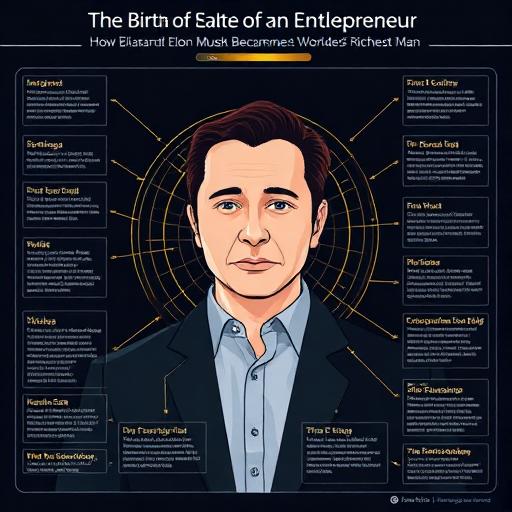
In 1984, at the age of just 12, Elon created his first video game called Blastar using the same computer his father had bought him. It was a single-player space shooter game where the player had to use their spaceship to destroy alien spacecraft. This wasn't just a hobby project—Elon actually sold Blastar to a computer magazine for $500, making it technically his first business venture.
By high school, Elon had realized he was more capable than other children his age. He understood that his capabilities could only be fully justified in one country: America. However, before heading to the United States, he decided to go to Canada first. His mother was a Canadian citizen, and according to Canadian law, she could transfer her citizenship to her children.
The Journey to North America
At 17 years old, Elon set off for Canada. He started living with his cousin and took up odd jobs to support himself. In 1989, his mother and brother Kimbal also moved to Canada. During this time, Elon enrolled at Queen's University. Within two years, he transferred to the University of Pennsylvania, and finally, his entry into America was complete.
In 1995, after finishing college, Elon and his brother Kimbal wanted to start their own startup. At that time, the internet was rapidly reaching common people, but finding local businesses or stores still required using paper directories. These directories contained details of all businesses in a city, and people had to use physical maps or ask for directions to locate stores.
Zip2: The First Major Success
Observing this inefficiency, Elon came up with a brilliant idea: why not create an online listing for businesses? He envisioned a website where all city businesses would be listed and divided into categories like restaurants, hotels, and doctors, making it easy for people to search. Additionally, there would be an online map for directions.
Elon and Kimbal rented a small apartment and began working on this idea. They named their startup Zip2. Elon would code day and night while Kimbal went door-to-door convincing shopkeepers to list their businesses on Zip2. Within a year, Zip2's team grew, the platform improved, and customers started joining rapidly.
Later, Zip2 also started building software for other companies. Seeing this growth, Zip2 received $3 million in funding, followed by $50 million. By 1999, the internet boom was at its peak worldwide, and large companies were eager to acquire promising startups. Compaq acquired Zip2 for $307 million. Elon received $22 million for his shares, making him a multi-millionaire at just 27 years old.
The Choice to Keep Building
Elon could have retired with this money, but Zip2's success was not even 1% of what his future held. He wasn't interested in an early retirement—he was just getting started. The entrepreneurial fire within him burned brighter than ever, and he was already thinking about his next big move.
X.com and the PayPal Revolution
During his college internship at Nova Scotia Bank, Elon realized that the banking industry was incredibly slow and old-fashioned. He wanted to disrupt it completely. His vision was to take every aspect of banking—payments, investments, loans, and savings accounts—entirely online, without any physical branches.
With this vision, he invested $12 million and started X.com in 1999. However, at that time, people didn't even trust online shopping, let alone online banking. Acquiring customers was extremely difficult for Elon. So he devised a brilliant strategy: he started giving $20 free to every new user who joined. Users could spend this money immediately, and they also received a $10 referral bonus for inviting others.
This strategy was incredibly successful. Within just two months, X.com had 200,000 users. But Elon wasn't the only one with this idea. Around the same time, a young entrepreneur named Peter Thiel had started a digital bank called PayPal. Both companies were spending millions on marketing to outdo each other.
The Merger and Power Struggles
By early 2000, both companies realized that if they continued fighting, they would both be destroyed. In March, the two companies merged. Elon became the largest shareholder and CEO of the new company, which retained the name X.com. However, after the merger, disagreements between Elon and PayPal's founders became apparent.
While Elon wanted to keep the company name as X.com, employees and customers preferred PayPal. Additionally, Elon's management style was quite ruthless. He would micromanage employees and publicly criticize them for mistakes. He expected work that should take days or weeks to be completed in just hours.
In September 2000, Elon married his long-time girlfriend Justine and went to Australia for their honeymoon. Seizing the opportunity, the company's senior executives and board of directors removed him from the CEO position and made Peter Thiel the CEO. Elon tried to regain control upon returning but was unsuccessful. Nevertheless, he remained PayPal's largest shareholder.
Fortunately, PayPal continued to grow well under Peter Thiel's leadership. In 2002, eBay acquired PayPal for $1.5 billion. From this deal, Elon received $180 million. After PayPal's success, Elon had become one of Silicon Valley's most successful entrepreneurs.
Personal Tragedy and the Drive to Keep Going
Just as Elon was riding high on his success, a devastating tragedy struck his life. Due to an illness, he lost his 2.5-month-old son forever. This incident deeply impacted Elon. He didn't go home for three weeks because he couldn't bear to see the empty cradle.
As a child, Elon had dealt with bullying by immersing himself in books and programming. Similarly, to cope with the loss of his son, he buried himself in work. The pain never fully went away, but channeling his grief into ambitious projects became his way of moving forward.
Looking to the Stars
In 2001, at 30 years old, Elon began searching for another industry to disrupt. He had been fascinated by space since childhood and used to build and launch mini rockets. So he started exploring the space sector. One day, a question struck him: why hadn't humans explored Mars yet?
He checked NASA's website and found that NASA had no plans to explore Mars. At that moment, he decided that his next mission would be to explore Mars. Elon met with the world's best rocket scientists and immersed himself in rocket science books, becoming an expert in the field himself.
The Birth of SpaceX
Elon launched the Life to Mars Foundation and started the Mars Oasis project. The main aim was to send a pressurized greenhouse to Mars and grow the first plant there. His objective was to prove to the world that life could exist on Mars. He wanted to show this experiment to the entire world through cameras and reignite global interest in Mars exploration.
Elon's plan was to buy intercontinental ballistic missiles from Russia and use them as launch vehicles. He planned a trip to Russia with some aerospace experts, but negotiations with the Russians never went well. The Russians didn't take Elon seriously because of his age. Elon had come to buy three missiles for $20 million, but the Russians quoted $21 million for just one missile.
Building Rockets In-House
Elon and his team realized that expecting rockets from Russia was futile. On the flight back, while his team sat disappointed, Elon was continuously working on his laptop. A few moments later, he told his team:
"We will build the rocket ourselves."
He had calculated all the costs of raw materials, manufacturing, assembly, and launch on his laptop. He realized that the raw materials needed to build a rocket cost only 2-3% of the final rocket's cost. The rest could be reduced through better design and manufacturing processes.
Elon understood that the real problem with the space industry wasn't that no one was exploring Mars. The problem was that humans didn't have affordable rockets to do so. He was about to transform the space industry completely. And thus began SpaceX.
SpaceX: Revolutionizing Space Travel
In June 2002, Elon bought a 75,000 square feet warehouse and converted it into a modern rocket factory. He hired the world's best rocket scientists and engineers from organizations like Boeing and NASA. Their single mission was to become the company that builds the cheapest and fastest rockets in the space industry.
To achieve this, Elon used several innovative strategies. While other aerospace companies kept rocket design teams and build teams separate, SpaceX combined them. This saved time and reduced errors. SpaceX also adopted vertical integration, meaning parts that previously came from third-party suppliers—like engines, fuel tanks, and battery packs—were now manufactured in-house, since suppliers were slow and expensive.
The Falcon 1 Promise
Finally, Elon noticed that other companies were spending 2-3 times extra money on every rocket part when the same work could be done with cheaper components. With this approach, Elon declared that SpaceX's first rocket would be called Falcon 1.
At that time, other companies charged around $70 million to send a 600 kg payload to lower earth orbit. Elon promised to do the same for just $7 million. SpaceX's target was to launch Falcon 1 within just one year, but despite all efforts, it took four years to prepare.
The Falcon 1 Launch Attempts: A Test of Resilience
Finally, in 2006, the day arrived. The 70-foot tall silver Falcon 1 stood ready for launch. The countdown ended, and the rocket began to lift off. The entire team started celebrating, but 25 seconds later, disaster struck. A small fuel leak caused a fire near the engine. Falcon 1 lost control and crashed. Elon and his team literally watched their dreams burn.
But they gathered courage and began preparing for the second launch without wasting much time. Exactly one year later, Falcon 1's second launch attempt took place. This time, 3 minutes had passed, and everything seemed fine. The first stage separation happened perfectly, but then the second stage engine shut down prematurely, causing Falcon 1 to spin in the sky and crash again.
The Third and Fourth Attempts
Elon was devastated, but he knew they were close to success. So he started preparing for the third launch. In August 2008, Falcon 1's third launch attempt occurred, but success eluded them again. Due to a minor error, Falcon 1 exploded in the sky. The control room fell into pin-drop silence. Along with this rocket, Elon's $100 million had also burned.
SpaceX now had money for only one more launch. If the next attempt wasn't successful, SpaceX would be finished forever. On one side, SpaceX was struggling, and on the other side, Elon had another company on the verge of ruin: Tesla.
Tesla Motors: The Electric Dream
While entering the space industry, Elon was also analyzing the automobile industry. He knew that current cars depended on fossil fuels, which were constantly depleting and causing pollution. His prediction was that in the future, every country's government would want to shift to clean energy vehicles. Electric cars were the future.
At that time, some companies had launched electric cars, like General Motors' EV1, but they all failed due to being slow, expensive, and having low range. After these failures, automobile companies had shifted their focus away from electric cars.
Finding Tesla
Elon understood that to make electric cars successful, they needed to be better than gasoline cars in speed, range, price, and aspirational value. Fortunately, he found a startup working on this very vision: Tesla Motors.
Tesla was started by engineers Martin Eberhard and Marc Tarpenning. Their idea was to build a high-performance electric sports car called the Roadster. Traditional electric cars used lead-acid batteries, but Tesla's research found that to charge the Roadster quickly and increase its range to 300 km, they needed to use the same batteries found in phones and laptops: lithium-ion batteries.
Additionally, their plan was to accelerate the Roadster from 0-100 km/h in just 4 seconds, with superior looks and features. In 2004, seeing this vision, Elon invested $6.5 million in Tesla and became its lead investor.
The 2008 Crisis: Near Bankruptcy
Tesla's vision was bold, but execution was extremely difficult. Lithium-ion battery technology was quite new, and modifying it for a car was challenging. Tesla had estimated selling each Roadster for $65,000, but by 2007, the manufacturing cost alone had reached $100,000.
Before they could address this, the 2008 global financial crisis hit, severely impacting the automobile industry. Elon had already invested whatever capital he had besides SpaceX into Tesla, and other investors refused to invest more money. Tesla was on the verge of bankruptcy.
A Double Crisis
In 2008, Elon faced the worst situation of his life. On one side, SpaceX was on the brink of ruin after three consecutive launch failures. On the other side, Tesla Motors was about to go bankrupt. Any logical entrepreneur would have raised funds to save one company, but Elon was different.
He sold his McLaren car and other personal assets and invested the money in Tesla so it could survive a few more days. Simultaneously, he personally got involved to make Falcon 1's fourth launch successful.
The Turning Point: Falcon 1's Fourth Launch
Finally, in December 2008, the day of Falcon