
Best Tech Career in 2026: High Paying Jobs with Growth and Stability","
Choosing the right tech career path can feel overwhelming with so many options available today. Whether you're a fresh engineering graduate or someone looking to transition into technology, understanding which roles offer the best combination of high salaries, long-term growth, and job stability is crucial for making informed decisions about your future. In this comprehensive guide, we'll break down everything you need to know about picking the perfect tech career in 2026 and beyond.
The Reality of Engineering Graduates in India
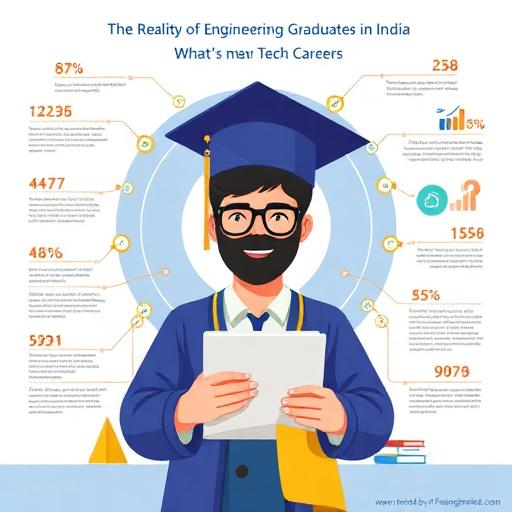
Before diving into specific tech roles, there are some important statistics and facts that every aspiring tech professional should understand. Every year, approximately 15 lakh engineers graduate in India alone. Out of these, only about 15-20% actually secure jobs in the tech industry. This means that to land a decent tech job, you need to be among the top 20% of engineering graduates.
But what happens to the remaining 80% of engineers? Some pursue higher education and go for masters degrees, while others prepare for government jobs. A significant portion ends up entering completely different fields altogether. This reality check is essential because it sets the foundation for understanding the competitive landscape you're entering.
Here's the encouraging news: if you manage to enter any of these tech fields and position yourself among the top 5% of engineers in India, you're going to do exceptionally well in that field in the long term. The key is not just entering the industry but excelling within it through consistent effort and skill development.
Setting Realistic Expectations
One pattern that emerges among certain students is having unrealistic expectations about tech careers. Some people hope to find a low-code or no-code type of job where they only need to learn two or three AI tools, do minimal work, and still earn a high-paying salary. The reality is that finding such opportunities is extremely difficult.
The majority of tech roles will meet some of these criteria but not all of them. Finding a single tech role that offers low effort, high pay, easy entry, and long-term stability is nearly impossible. If you're operating under such expectations, it's better to adjust them now before beginning your career journey.
Choosing Based on Your Primary Priority
Different students have different priorities when selecting a tech career. Let's examine the best roles based on what matters most to you. Understanding your primary motivation will help you narrow down your options significantly and focus your preparation efforts in the right direction.
If High Salary is Your Top Priority
For freshers whose primary hiring criteria is landing a high-paying job, there are two roles that should be on your radar. The first is software engineering roles, especially positions in large startups and big multinational corporations (MNCs). The second category is AI engineering roles, which have seen tremendous growth in compensation packages recently.
These two fields consistently offer some of the best starting salaries in the tech industry. However, remember that high packages come with high expectations. You'll need to demonstrate exceptional skills and put in significant effort during your preparation phase.
If Long-Term Growth and Stability Matter Most
Some students want to target roles that will remain relevant for a long time and offer substantial growth potential in the long term. If future-proofing your career is your primary concern, the same two roles apply: software engineering and AI engineering. Both fields show strong indicators of continued relevance and expansion.
Additionally, there are several other tech roles with excellent long-term growth potential, including cyber security, DevOps, and cloud-related opportunities. However, these fields present a challenge for freshers because it's quite difficult to get a starting good opportunity without prior experience.
If Quick Entry is Your Goal
For students who want to enter the workforce as quickly as possible and secure a starting job without extended preparation periods, targeting fields with the highest number of available opportunities makes sense. The field with the most opportunities available is software engineering and software development.
Compared to the second and third most popular roles, software development has relatively more job openings for freshers. The second position goes to data analyst roles, and the third belongs to software testers. If we were to add a fourth option, that would be AI engineering.
Understanding the Logic Behind These Recommendations
Now that we've covered the conclusions, let's explore the logic and facts behind these recommendations. When picking a tech role, multiple factors need consideration. For the majority of students, the primary factor is packages or salary.
The Package Perspective
When it comes to packages, you shouldn't just focus on fresher-level salaries. What matters equally is the salary growth trajectory at middle-level and senior-level positions. Top packages exist across multiple roles in the industry, but software engineering and AI engineering have been specifically highlighted because entering these fields as a fresher is relatively easier compared to other high-paying roles.
According to statistics published by CIO, the top 10 in-demand jobs in the tech sector in terms of packages include software engineering and AI engineering prominently. While other roles also feature on this list, these two stand out because they offer relatively more opportunities for freshers.
Whenever we discuss top packages, it's crucial to remember that this also means putting in a high number of efforts. As mentioned earlier, you need to be in the top 20% of freshers just to target decent tech jobs. When aiming for top opportunities with the best packages, you need to be among the top 5% of engineers.
Skills Required for Software Engineering
Let's break down what you need to learn for software engineering roles. The engineers considered here are those working in top tech MNCs and top startups. The primary hiring criteria for these positions revolves around Data Structures and Algorithms (DSA) and development skills.
For DSA, you need to develop a strong command over the concepts. The two most popular programming languages for DSA practice are Java and C++. You can pick either of these languages and practice your entire DSA curriculum thoroughly. Consistent practice on platforms dedicated to coding challenges will be essential.
Development Skills Are Non-Negotiable
In today's competitive market, knowing only front-end development is not sufficient. You need to master full-stack development and learn how to deploy projects as well. A decent level of development knowledge is essential, especially if you're targeting top startups that expect candidates to build and ship complete products.
The tech stacks you might consider include MERN stack (MongoDB, Express, React, Node.js), MEAN stack, or platforms like Android and iOS for mobile development. These are all valid full-stack development paths that can lead to excellent opportunities.
Skills Required for AI Engineering

AI engineers represent a hybrid of software engineers and data scientists. This combination requires understanding software engineering principles thoroughly. You need to know how to work with APIs, how to integrate different AI tools, what version control means, and how databases function.
Beyond software skills, AI engineers must understand machine learning and deep learning algorithms. This includes the mathematical concepts behind these algorithms. The math required covers four important areas: linear algebra, statistics, probability, and differential calculus.
If you have a decent command of these mathematical concepts, meaning you've studied math up to the 11th and 12th-grade level, then machine learning and deep learning algorithms will make sense to you. Don't be intimidated by the math requirements; they're manageable with proper dedication.
Number of Opportunities: The Quick Entry Factor
According to multiple hiring platforms, the tech role with the maximum number of opportunities available, especially for freshers, is software engineering and software development. When we discuss software development here, it encompasses all kinds of development in the tech field.
This means you can specialize in a particular tech stack, upskill yourself accordingly, and then target jobs related to that specialization. Opportunities exist both in on-campus placements and off-campus hiring. Looking at exact job statistics, the number of opportunities in software development is almost double compared to the second-place contender.
Data Analyst and Software Testing Roles
The second and third positions for opportunity volume go to data analyst roles and software testing roles respectively. Both of these are fields where entering as a fresher is relatively easier. However, it's important to understand the distinction between data analysts and data scientists or AI engineers, as some students confuse these roles.
Data analysts work primarily with data and business logic, transforming raw information into actionable insights. Software testers, on the other hand, are responsible for testing all the code that software developers and software engineers build. They ensure quality and functionality before products reach users.
Long-Term Growth Considerations
Both data analyst and software testing positions are excellent fields; any role where you can secure a good job is valuable. However, in the tech industry, you'll notice that these positions, while easier to enter as a fresher, generally don't offer as much growth in terms of packages in the long term compared to software engineering and software development.
This reality shapes the career strategies of many engineers. Some get hired as freshers in data analyst positions and, with time, gain experience in the field while upskilling themselves with additional capabilities. After building this foundation, they either shift into data science or pursue an MBA to move completely to the business side of operations.
Similarly, some engineers start with software testing and gradually transition to development-related positions as they gain experience and additional skills. These career pivots are common and can be effective strategies for long-term growth.
Future Growth: The Most Important Long-Term Factor
Future growth is arguably the most critical criteria to consider because you don't want to invest years in a field that becomes irrelevant later. You want to pick a field where substantial growth is predicted for the coming years.
According to multiple research studies, the fields showing the best future trends are AI, cyber security, data engineering, and software engineering. These areas demonstrate strong indicators of continued expansion and relevance in the global technology landscape.
The Talent Deficit Opportunity
Some of these fields, especially AI and cyber security, face a significant talent deficit in today's market. This means there are many roles available, but not enough skilled professionals to fill them. This gap creates a bright future for professionals who develop expertise in these particular areas.
This talent shortage is why freshers have been recommended three top fields: AI engineering, software engineering, and data science. These three offer a relatively good number of opportunities for those just starting their careers while also providing strong long-term prospects.
Specialized Niche Fields
Apart from the recommended three, there are many specialized niche fields with very positive future trends. These include cyber security, cloud computing, and DevOps. However, these fields present a unique challenge: the majority of tech companies prefer to hire working professionals rather than freshers.
Why does this preference exist? When any good company operates at a large scale with significant opportunities, they want their cyber security team to consist of already experienced engineers. Similarly, their cloud or DevOps teams need professionals who have already worked as software engineers and understand production systems.
This doesn't mean you can't enter these fields as a fresher, but you will face challenges. If you're ready to overcome them, you can definitely try. The alternate option is to join the tech industry as a software engineer or data scientist, work for a few years to gain experience, and then transition into these specialized fields by learning the required skills.
The Transition Strategy for Experienced Professionals
For those who start in one role and want to transition to another, there are clear paths available. A software engineer can learn DevOps skills and transition towards DevOps engineering. A data scientist can learn DevOps additionally or MLops (Machine Learning Operations) and transition towards becoming an MLops engineer.
This upskilling and transition process is gradual; it doesn't happen overnight. However, it represents a viable strategy for accessing fields with excellent long-term potential that are difficult to enter directly as a fresher.
Work-Life Balance Considerations
Some students consider work-life balance as a factor when choosing their roles. While this is a valid consideration, it's not recommended to prioritize work-life balance in the initial 5 to 7 years of your career, especially in your early 20s. This is the time to build skills, establish yourself, and create a strong foundation.
However, if work-life balance is your long-term goal and a significant priority, there's a strategy to achieve it. In the long term, regardless of which role you're working in, try to target large MNCs rather than startups. Startups are generally in the growth phase where work-life balance isn't as readily available as it is in big MNCs and established large tech companies.
Work-life balance tends to be more achievable in developed countries like the USA and UK. This could be something to target in the long term after building substantial experience and expertise in your chosen field.
The Truth About Interest and Passion
Notice that interest or passion hasn't been mentioned as a criteria even once in this discussion. The basic assumption is that if you're researching tech careers and reading guides like this, you already have enough interest in building a career in technology compared to other fields. That baseline interest is sufficient for getting a job and building a career.
The most important factor is not interest or passion; it's effort. The question to ask yourself is: are you going to be the fresher who has put in 1.5 to 2 years of hard work and time towards a particular goal? That dedication matters far more than any abstract notion of passion.
The Daily Commitment Required
If you're a first-year, second-year, or even third-year student, you need to keep a check on yourself. Ask: am I a student who is giving 3 to 4 hours of programming, coding, and upskilling every single day? When we talk about coding and programming, this isn't referring to college academics or classroom work.
What matters is learning skills that are relevant in the industry, skills that are going to be very relevant for your career. If you can consistently dedicate 3 to 4 hours daily to such learning, you will be able to position yourself among the top 5% or even top 1% of engineers in the industry. That should ideally be the goal for every student who wants to excel in this field.
Practical Steps to Start Your Journey
Now that you understand the landscape, here are practical steps to begin your tech career journey. First, decide which priority matters most to you: high salary, long-term growth, or quick entry. This decision will guide your preparation strategy.
Once you've identified your priority, select one of the recommended fields. For most students, software engineering offers the best balance of opportunities, salary potential, and stability. AI engineering is excellent for those interested in cutting-edge technology. Data science suits those who enjoy working with data and statistical analysis.
Building Your Skill Set
After selecting your field, create a structured learning plan. For software engineering, start with one programming language (Java or C++) and master DSA concepts. Simultaneously, learn full-stack development using a popular tech stack. Practice coding problems daily on competitive programming platforms.
For AI engineering, build your software engineering foundation first, then add machine learning and deep learning knowledge. Brush up on the required mathematics if needed. Work on projects that integrate AI tools and demonstrate your ability to build complete solutions.
Tracking Your Progress
Set specific deadlines for yourself and track your progress honestly. Cut distractions that eat into your learning time. Focus on one thing at a time rather than getting confused by trying to learn everything simultaneously. If you've decided on a goal, stick with it and put in consistent efforts.
The students who succeed are those who narrow down a particular role, set clear goals, and dedicate 1.5 to 2 years of focused hard work. This upskilling period is essential for standing out in a competitive job market where thousands of graduates compete for limited positions.
Final Thoughts
Choosing the right tech career requires understanding both the current market realities and future trends. Software engineering remains the safest bet for freshers due to the sheer volume of opportunities and strong salary potential. AI engineering offers exciting possibilities for those willing to master both software skills and machine learning concepts. Data science provides a solid entry point with clear paths for advancement.
Remember that success in any of these fields comes down to consistent effort over time. Being among the top 5% of engineers isn't about innate talent; it's about dedication, discipline, and daily practice. Put in 3-4 hours of focused learning every day, cut distractions, and stay committed to your chosen path.
The tech industry continues to grow and evolve, creating new opportunities for those prepared to seize them. Whether you choose software engineering, AI engineering, or data science, the key is to start now, stay focused, and never stop learning. Your future in tech begins with the choices you make today and the effort you put in tomorrow. Keep learning, keep exploring, and build the career you deserve in this exciting and rewarding industry.